


 (855) 304-3748
 Email Us
 Schedule a Call


Beyond The Mask Podcasts
Beyond The Mask is a podcast that covers all sorts of topics related to the CRNA industry such as taxes, investments, insurance, risk, estate planning and much more. Each week, we discuss the important issues that happen both in, and beyond, the operating room.
Listen and subscribe on your favorite podcast apps like Apple Podcasts, Spotify, and Google Podcasts.
Click the button below to download the Certification of Completion to get Class B CE Credit

Many issues are facing our country right now and nurses will play a key role in helping communities move forward. As the most trusted profession, nursing should embrace that position and that’s what many leaders are trying to do. ANA President Ernest Grant, PhD, RN, FAAN, joins us on this episode to share his view on what he feels are priorities right now, how nurses can impact the future, and why representation is still crucial for the profession.

Before we share anything, please note that this is an emotional episode. Not only was the journey to a DNP a long and arduous one for Sharon with plenty of highs and lows that we’ll discuss, but we begin the show with heartbreaking news about Sharon’s granddaughter, Emma Kate. It’s tough to discuss but it’s important for the healing process and we appreciate everyone for the support along the way.

On this episode, we’re going back to a previous conversation with the three women behind the Scrub Caps & Sippy Cups podcast. This trio does great work for mothers in our profession so we wanted to spotlight them once again on the show. Plus, a lot has changed for them since we talked in early 2020.
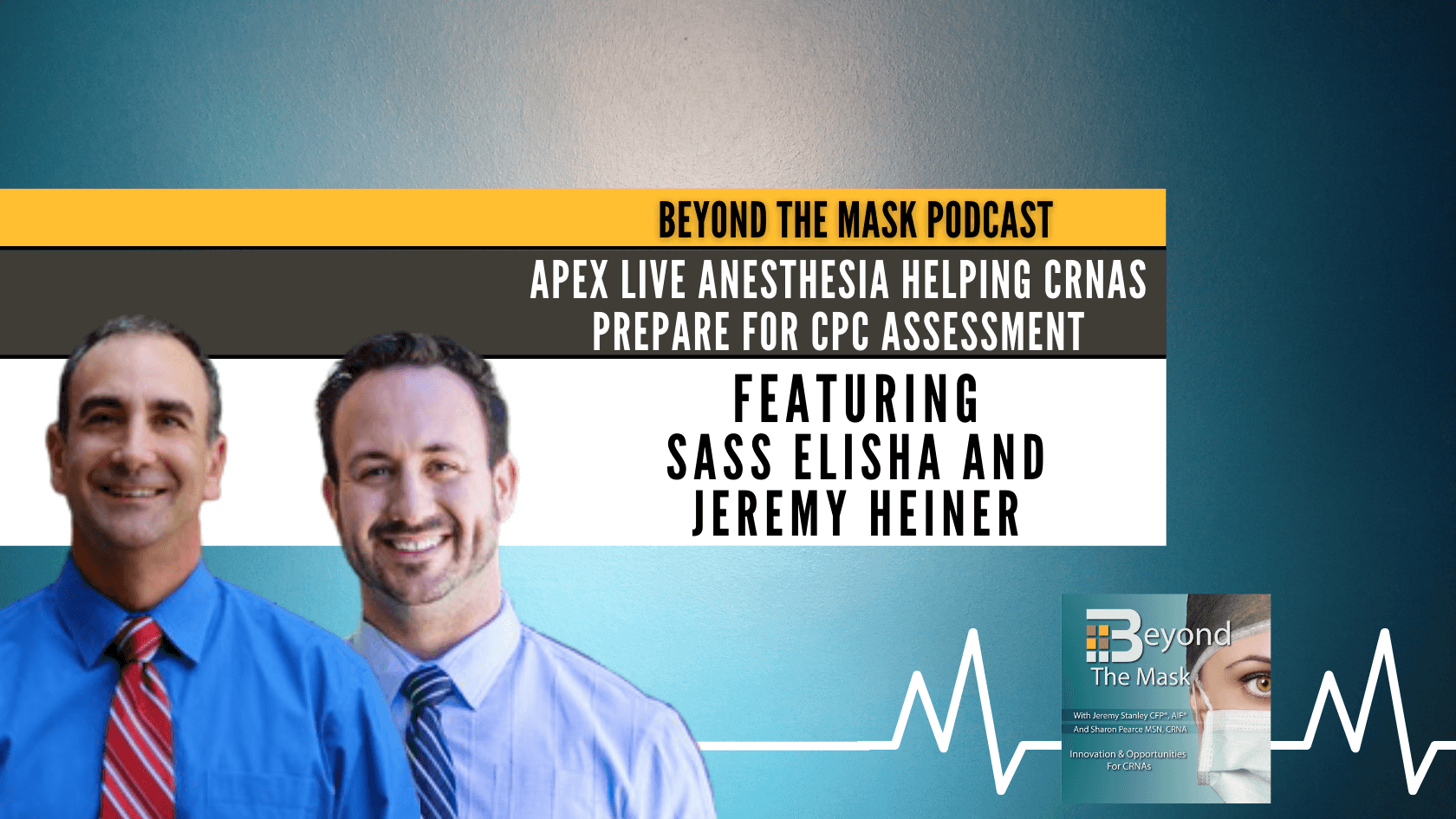
Testing is never a relaxing experience and that’s why the upcoming CPC Assessment has created some anxiety for CRNAs. Thankfully, the duo behind APEX Live is working hard to help educate and prepare CRNAs through events, podcasting, and teaching. Jeremy Heiner EdD, CRNA and Sass Elisha EdD, CRNA, FAAN join us today to tell us more about the work they’re doing and then take us through some sample questions that might be found on the assessment.

No matter how closely you follow standard of care, mistakes can be made in the operating room. CRNAs often get named in claims, even if they did everything right, so it’s important to be aware of how this happens. Marjorie Everson, PhD, CRNA, has been studying closed claims and there are plenty of findings that she hopes can help CRNAs and SRNAs in the future.

Home values continue to rise all across the country and it has many people thinking back to the crash of 2008. Are there parallels or is this time different? Josh Mettle of NEO Home Loans joins the show to share his data and insight into the real estate market. Plus, he’ll tell us how he helps CRNAs secure a mortgage with a 1099 income.

The rate of suicides among our veteran population continues to rise and the number is probably higher than most people realize. The good news is people are leveraging incredible new data to improve support and care for those that need it most. Kevin Driscoll, DNP, MSN, CRNA, is the only CRNA certified in these geographic information systems (GIS) and he joins us today to share his passion for data, how it’s being used to serve veterans, and the other possibilities that could come from GIS.

There’s a relatively new concept in the healthcare industry that many of its professionals are facing and might not even realize it. The ‘Second Victim’ phenomenon hasn’t always been well-known but more and more people are acknowledging this silent epidemic that frontline workers like CRNAs are dealing with every day. Robyn Finney, APRN, CRNA, DNAP has created a peer support program called HELP – Healing Emotional Lives of Peers – that is working diligently to improve the lives of anesthesia providers, and she joins the show today to help us better understand this phenomenon and how it’s affecting our industry.

A significant number of people in our country are dealing with the effects of PTSD and it often goes overlooked or ignored. With the amount of added pressure CRNAs and SRNAs have due to the job, it shouldn’t be a surprise that suicides happen too often among our peers. So how do you identify issues and help those you think might be struggling? We’ve asked mental health experts Jerry Hogan, DNSc, CRNA and Chuck Griffis, PhD, CRNA to join the show to help us all learn more about the struggles people are facing and what can be done to prevent suicides in the future.

Generational differences can often be the source of disagreements and misunderstandings. It happens in every profession and nurse anesthesia is no different. Erin Martin, CRNA, DNP, is the Program Director at the Mayo Nurse Anesthesia Program and has an incredible grasp on how and why each generation is different. She joins today to provide a thorough examination of these unique communication characteristics and how we can use them to improve education.

You won’t find many people on this planet that have a story to tell like Nick Zerwas. Born with congenital heart defect, Zerwas has been given six months to live on six separate occasions but he’s still here living life to the fullest. Who better to get an opinion on healthcare policy changes than someone like Zerwas, who has also served in the Minnesota House of Representatives? Join us as we hear his amazing story of beating the odds and how he’s overcoming his greatest fear of wasting precious time by trying to make a difference.

It’s easy to assume that your employer insurance coverage will protect you during a catastrophic event, but that’s not necessarily the case. To truly cover your greatest asset as a CRNA, which is yourself and your ability to earn a living, a personal disability insurance policy can be a life saver. Today we talk with BrightThink Wealth Strategies insurance specialists Robert and Kyle Smith, who specialize in working with CRNAs, to learn about the why this coverage is so critical.
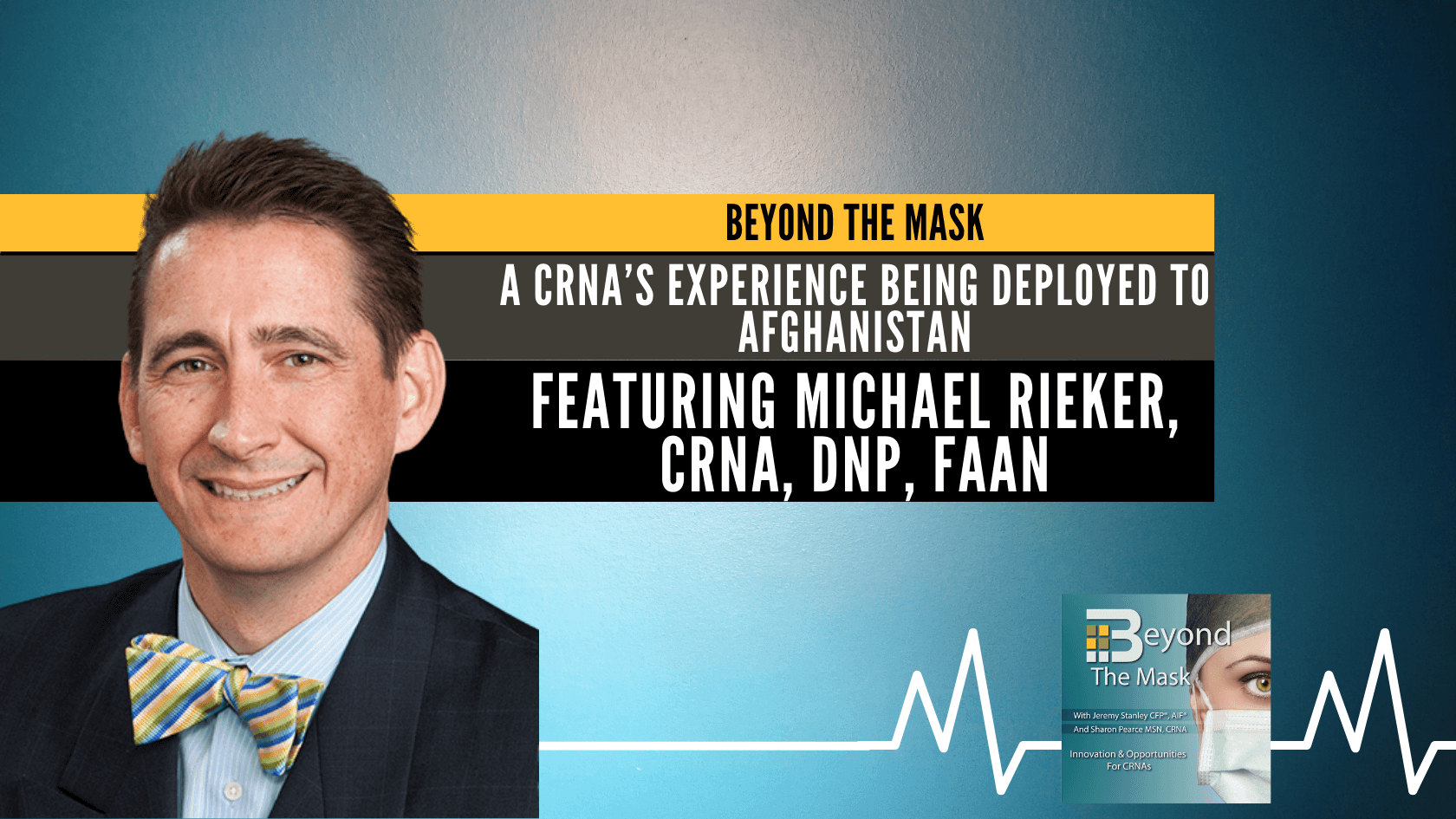
Most people buy an expensive car or go on an outlandish spending spree when they’re in their late-40s, but Michael Rieker, CRNA, DNP, FAAN, isn’t like most people. Instead of doing any of those other things, he used his talent and skills in nurse anesthesia to join the Army Reserve, which led to him serving in Afghanistan. Today he’ll tell us about that experience and how it’s helped him in his current role at Wake Forest University.

Agatha Hodgins earned notoriety as the founder of the AANA but a person right behind her often gets overlooked. That’s Gertrude Fife, the second president of the AANA, and she’s the next focus of our historical series. We look back on how she helped shape the organization and set the standards of education for CRNAs with the help of Nancy Bruton-Maree, CRNA, and Sandy Ouellette, CRNA.

Advocacy is the driving force behind elevating our profession and continuing to push nurse anesthetists and CRNAs forward. One of the key people advocating for us is Lorraine Jordan, PhD, CRNA, CAE, FAAN. As the Chief Advocacy Officer for the AANA and the CEO of the AANA Foundation, Dr. Jordan works tirelessly for her peers and devotes countless hours to research that benefits us all. Today we want to spotlight the work she’s doing and learn more about the goals and purpose of the AANA Foundation as it leads us into the future.

The AANA and CRNA community suffered a great loss in March with the passing of Steve Mund, DNP, CRNA, CENP, FACHE. To help remember him and his legacy in the profession, Jeremy and Sharon wanted to go back and revisit a conversation they had with him in 2019 on the future of healthcare.

Goldie Brangman, CRNA, might be known best for becoming the AANA’s first African-American president, but there’s so much more to know about her life and career. Today we wanted to celebrate everything she accomplished, including helping save Dr. Martin Luther King, Jr’s life, and we do so with the help of Nancy Bruton-Maree, CRNA, and Sandy Ouellette, CRNA.

There’s a growing need for pain management solutions in our country and it could be the next great opportunity for CRNAs. Cheryl Schosky, DNAP, MSN, CRNA, is one of only 89 CRNAs in the country with a non-surgical pain management certification and will share everything she’s learned about the practice and why she believes it needs to become an educational track for future CRNAs.

It’s like a story right out of a Hollywood blockbuster. One that involves predawn flights, heavy military ammunitions, and a Crown Prince from the United Arab Emirates. Most importantly, it’s a secret mission involving CRNAs. Join us as we get the first-hand account of this 2017 covert operation from Lt. Col Laura Wiggins, CRNA, who was a part of this flight into Yemen.

You might know him as Bolt CRNA on social media. This new-age advocate for the profession has built a strong following through YouTube, Facebook, Instagram and now Tik-Tok. Find out how Jason Bolt, CRNA, began this journey as an ‘influencer’ and how he uses his platform to help educate current and aspiring nurse anesthetists.

The loss of a child can be the greatest weight a parent can carry through life, but Steve James, CRNA, and his wife turned a tragedy into a world-changing mission. Today we’ll learn all about this remarkable journey from Alabama to Kenya and how CRNAs are making a major difference halfway around the globe.

When you look at areas of the nurse anesthesia profession that need improvement, diversity would be near the top of that list. Thanks to Dr. Lena Gould, EdD, CRNA, FAAN, there’s a mentorship program in place that is helping facilitate entry into the profession for people of color. Today we’ll spotlight that work that’s being done, share Dr. Gould’s incredible journey to this point, and discuss ways to keep increasing diversity in the operating room.

For more than 20 years, the AANA Mentorship Program has played an integral role in the development of young CRNAs thanks to both the mentors and mentees that have committed to the annual event. Tracy Castleman, CRNA, has been deeply involved in the mentoring process so we asked her to join us to talk about the program, why it’s important for CRNAs to get involved, and what young professionals can expect to get out of this experience.

If you’re in the need for inspiration, you’ll be hard-pressed to find a better story than the one that Jeanne Stawiecki, CRNA, will tell on this episode. Thanks to the power of positive and determined thinking, she went from smoking two packs of cigarettes each day to setting two Guinness World Records for marathon running and mountain climbing. It’s an incredibly powerful and emotional story and one you don’t want to miss.

After watching another historic Inauguration Day, we can’t help but notice that the country has mixed feelings about where we’re headed. You can say we’re living in a 50-50 world. So as we welcome in a new administration, what can CRNAs expect from the economy moving forward and what does it mean for your finances.

We’ve finally reached the end of 2020 and everyone is looking forward to turning the page to a new year. These past ten months have been a financial burden on so many CRNAs and their family and friends, but now is an opportunity to assess your future and make the changes you need. Financial planning can feel overwhelming so we put together a checklist to guide you through the most important areas of your money.

Jeremy and Sharon had a chance to speak at the 2020 NCANA/SCANA Virtual Meetings about the impact COVID-19 on CRNAs and their financial security. They’ll provide some eye-opening stats about the economy overall from the past six months and share the direct effect it’s had on CRNAs. But don’t fret, there will also be guidance on what you can be doing to get your financial future in order. Hear that full presentation on this episode.

CRNAs already have plenty to worry about each day and it’s convenient to put finances to the side. As we’ve seen in 2020, the unexpected can happen at any time so we need to make sure you have a plan for your money.

You likely seek financial advice from lots of different sources. And some of those sources will certainly have good intentions, but they’ll often give bad financial advice. Let’s look at some examples and explore the reasons why we have to be very careful from whom we’re taking this important guidance.
Once you decide to step away from your CRNA career, have you thought about how you want to spend retirement? As you get closer to that next chapter, it’s important to think through your lifestyle to help determine what kind of expenses you might incur and how much money you’ll need to cover it. Today we’ll tell you about the most common lifestyles that CRNAs choose and some of the financial considerations that come along with each option.